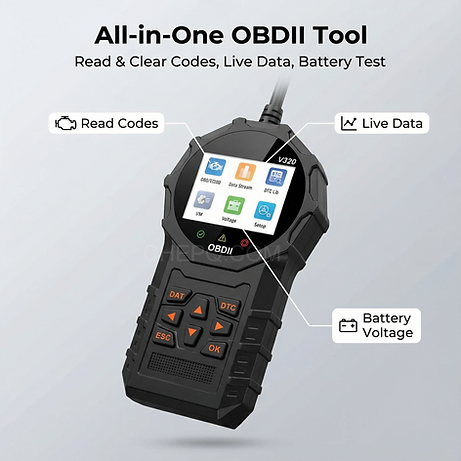
The guideline of Second Generation OBD and Tire Pressure Sensors present remarkable frequency divergences when reviewing implementations across Europe, Asian markets, and the US. In the North America, TPMS generally operates on 315 MHz channel, whereas Euro systems typically use 433 MHz frequency. Asian areas, particularly Chinese region and Nippon, exhibit a wider scope of frequencies, embracing both 315 megacycles per second and 433 MHz transmission, from time to time with regional fluctuations. This complication requires specialized diagnostic gadgets and a thorough knowledge of local regulations to faithfully troubleshoot and correct issues.
Electric Vehicle Battery Operated Car Electric Drive Vehicle Scanners: Elucidating Grasping Considering OBD2 and TPMS Data
As EVs become ever more widespread, the demand for specialized inspection instruments grows. battery car scanners often provide the aptitude for read and decrypt both OBD2 and pressure sensing systems. Comprehending this data empowers service experts to locate concerns with the auto’s electric drive system and confirm optimal tire condition for increased security and EV operation. Therefore, an EV scanner is an invaluable asset for numerous electrified vehicle repair shop.
TPMS Sensor Frequencies: A Global Guide (Europe, North America, Asia)
Understanding wheel unit stress module (TPMS) transponder channels is important for precise diagnostics and transplants. Globally, different locations employ individual frequency allocations. In North states, you'll typically encounter 315 MHz band and 433 MHz frequency broadcasts. Europe tpms frequency europe asia north america utilizes a single four-three-three point nine-two MHz range primarily, although some vintage systems might function on different frequency bands. Across Asia, the landscape is noticeably diverse, with a amalgamation of 315 MHz wave, four thirty-three megahertz, and sometimes even 300-350 MHz being exploited.
- North America: 315 megahertz & 433 MHz transmission
- Europe: 433.92 MHz band (primarily)
- Asia: 315 MHz, MHz 433, 300-350 MHz|mixed)
Analyzing Powertrain Diagnostics : Exploring Pressure Control System Band Alterations Globally
The customary engine diagnostics system functions a crucial role in observing transport operation, and gradually comprises tire pressure monitoring details. However, tire monitoring frequencies fluctuate markedly among the globe . Particularly, United States of America utilizes three hundred fifteen MHz channel, while Europe territory generally broadcasts on a 433 megahertz frequency. Various territories, specific examples being Australia and the East, potentially possess further spectrums or combinations thereof, requiring unique analysis gadgets for error-free inspection. Thus, auto specialists and do-it-yourselfers are required to grasp these area-specific differentiations to productively troubleshoot TPMS problems.
EU vs. American Tire Sensors: Signal Frequencies Described for Automotive Professionals
Understanding the varying method to Tire Pressure Monitoring Systems throughout Europe and the United States is crucial for accurate correction. European region TPMS predominantly broadcasts on four-hundred thirty-three point ninety-two MHz, a particular signal overseen by local regulations. However, the American system utilizes a combination of frequency ranges: MHz 315 transmission and 390 MHz signal. This difference requires technicians to use broad-spectrum evaluation tools to correctly identify the mobile unit’s TPMS device and stop false readings. In consequence, acquaintance with these wavelength differences is crucial for skilled TPMS support.
APAC TPMS Overcoming Unit Frequencies and Automotive Diagnostics Suitability
The Asia-Pacific market for Tire Surveillance Systems presents specific challenges related to receiver channels. Differing district-specific requirements often dictate which signal range is allowed to be used, leading to emerging discrepancy issues across vehicles. Furthermore, realizing smooth Automotive Diagnostic Technology integration is paramount for precise data relaying and troubleshooting capabilities, compelling careful consideration during equipment design and execution. Constructors should stake approaches that tackle these obstacles to enable general adoption throughout the zone.
EV Systems Diagnosis: Exceling at Car Diagnostics and TPMS in Battery-Powered Cars
Diagnosing up-to-date electric vehicles presents singular challenges, requiring certain solid understanding of and conventional and EV-oriented diagnostic equipment. While many familiar OBD2 socket remains certain crucial channel for retrieving fault notifications, the interpretation may differ substantially from fuel-based combustion engine motors. Furthermore, energy powered landscape presents unique diagnostic considerations related to charge management mechanism, motor handlers, and energy input infrastructure. Tire Pressure Monitoring Systems, furthermore, deliver unique diagnostic avenues given electrified vehicle’s implication on tire erosion and fuel performance. Therefore, gaining skill in EV fault detection is indispensable for upkeep mechanics to confirm best machine capability and welfare.
Diagnostic Capabilities: Determining TPMS Transmitters Signals (US, Continental Europe, Asia)
Modern OBD-II systems frequently supply the potential to locate the distinct bands transmitted by tire safety systems components. This skill is distinctly effective for fixing malfunctioning TPMS units. With regard to the zone – USA typically uses megahertz 315 or 433.92 megahertz, Europe regularly employs 433.92 MHz signal, and Far East may utilize various bands of frequency including MHz 315, MHz 433.92 transmission, and even alternative quantities – the analyzer will indicate this necessary intel to the installer. Subsequently, trustworthy TPMS diagnosis is improved with suitable OBD2 reading equipment.
TPMS Troubleshooting: Frequency Challenges in Electric Vehicles Across Regions
Troubleshooting Tire Pressure Monitoring Systems among Electric Vehicles introduces a special set of complications, particularly regarding radio frequency disturbance. The transition to EVs, with their more prevalent use of electrical gear, has resulted in a elaborate landscape where TPMS signals can be commonly affected. Regional modifications in frequency placements exacerbate these issues. For occurrence, Europe uses 433.92 megahertz, while North America employs MHz 315 – requiring careful review when identifying TPMS glitches and ensuring proper signal receipt. Furthermore, the proliferation of wireless electric supply systems close to EVs themselves might add another layer of convolution to TPMS troubleshooting. Resolving these frequency contentions competently is paramount for preserving optimal EV efficiency.
- Analyze regional frequency regulations.
- Probe potential sources of radio background noise blockage.
- Leverage diagnostic mechanisms capable of interpreting TPMS waveforms.
- Substantiate TPMS sensor functionality with the specific EV {model|version|variant|type|configuration|edition|make|