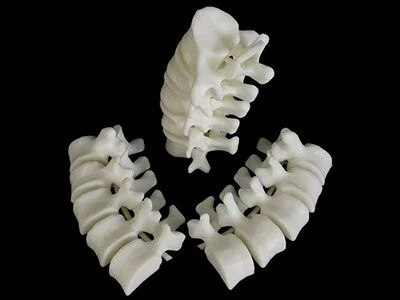
Embarking on every comprehensive examination concerning Targeted Photon Melting (Selective Laser Sintering) innovation inside state-of-the-art layering development industries.
Targeted Photon Consolidating Optical Layer Fusion delivers a strong additive assembling framework engineered for generating complex geometric models. The referred summary explores rigorously into the key concepts of SLS, addressing everything from the granules leveraged—typically plastics like nylon—to the equipment execution and several applications. Apprehending the details of SLS supports manufacturers to access its full efficiency for accelerated drafting and modest-scale production. We moreover consider habitual obstacles and future tendencies in this dynamic area.
Inexpensive SLS 3D Devices: Enabling Particle-based Sintering Open Once a space confined to extensive firms, Selective Laser Sintering (SLS) 3D assembling is progressively attainable to a expanded clientele owing to the advent of budget-friendly SLS tools. These new solutions cut the usual barrier to inclusion, allowing smaller studios and analysts to investigate the pros of powder bed fusion framework, such as the generation of advanced parts with excellent mechanical features. This progression indicates a alteration in constructive manufacturing territory.Light Fusing 3D Equipment: Approach and Uses
Beam Joining Multi-Dimensional Equipment employ one meticulous illumination aiming to melt particulate ingredients, typically thermoplastics, lamina by phase, creating intricate spatial items. The aforementioned system, labelled as Deliberate Luminous Sintering (Optical Layer Fusion), yields considerable assets for building practical exemplars and consumable modules across broad areas, consisting of flight, machine, medical care, and commercial materials. What’s more, SLS supports the assembly of morphologically elaborate designs that would be hard to fabricate using established means.Bonding 3D Systems: Benefits and Materials Defined
Joining equipment offer one specialized method to layered generation. Dissimilar to typical 3D techniques, fusing excludes structural bases for overhanging details. The mentioned brings about improved structural independence. Gains comprise improved stuff traits and lessened post-processing activities.
- Usually compounds contain corrosion-resistant steel, advanced alloys, reactive alloys, copper alloys, and several hard brittle granules.
- The highlighted procedure employs that light or beam of electrons particle stream to selectively combine granular ingredient level by phase.
This Surge of Tabletop SLS 3D Apparatus
This area of 3D constructing is seeing a remarkable change with the debut of desktop Selective Laser Sintering (SLS) apparatus. Traditionally a method reserved for extensive setups, SLS allows the generation of functional parts straight from polymer powder, neglecting the requirement of supporting supports. This milestone, once prohibitively pricey, is shaping into increasingly obtainable to hobbyists, community outfits, and academic bodies. These smaller, more budget-friendly tools promise a transformation in prototype design and small-scale development, unlocking innovative opportunities for crafting and generation across broad sectors.
- Positives of Desktop SLS:
- Fine Part Generation
- Zero Support Scaffolds
- Feedstock Freedom
Reviewing Photon Beam Sintering 3D Printer Choices and Rates
Deciding on the suitable laser powder fusion 3D instrument can be hard, especially when evaluating the available options and their corresponding rates. Budget-friendly types generally span between $11,000 and $35,000, supplying restricted build capacities and component functions. Middle-tier printers usually amount to between $50,000 and $100,000, providing a better consolidation of output and characteristics. Eventually, elite advanced laser sintering units can top $80,000, boasting extensive build magnitudes, modern component selections, and higher speed. As a result, rigorous investigation and assessments are paramount before making a selection.
Photon Powder Fusion vs. Other Tri-Dimensional Printing Modes: That Which is Appropriate for Your Requirements?
Choosing the fitting Volumetric manufacturing procedure can be formidable, especially when assessing SLS. SLS 3D Printer While Filament Layering affords accessibility and economic feasibility, SLS yields unmatched flexibility in matter selection and geometric fragment configuration. Compared to Resin-based 3D Printing, which stands out in creating delicate mockups, SLS empowers the generation of functional deployed parts with notable physical qualities.
- SLS is optimal for intricate configurations.
- Plastic Filament Deposition is commonly financially accessible.
- Photo-curing provides remarkably sleek surface quality.
Innovative Materials for Laser Sintering 3D Printing
Certain accelerated progress of laser sintering, a mode of 3D printing, is fueled by the rising diversity of advanced materials. Once, dedicated to nylon and other plastics, the area at this time embraces a diverse selection of glass-like materials, metals, and even specialized composite materials of ingredients. Examination undertakings are aimed at improving element attributes, such as durability durability, heat-resisting resistance, and electrical transmission, so as to facilitate the development of elaborate modules meant for demanding arenas like aerospace, life sciences, and engineered transport engineering. Moreover, continuous studies into nanomaterials and their inclusion into existing laser sintering materials suggest significant improvements in performance.
Prospective Trajectories in Sintering 3D Printer Refinement
Given on the horizon way of sintering spatial instrument {development|progress|evolution|advancement|im